Habits aren’t necessarily good

Habits are praised as the foundation of success. Build good habits, repeat them daily, and results will follow. In personal development, this often works, but in organizations, it’s more complicated.

When processes become habitual, they stop being questioned. Teams do things “because that’s how it’s always been done.” What once was a smart solution becomes an unquestioned routine. Over time, habits turn into invisible rules.

Innovation requires friction, it requires stopping and asking why. Habits do the opposite, they remove friction, speed things up, and reduce cognitive effort. That’s great for stability, but terrible for evolution.

The most dangerous habits aren’t bad ones. They’re successful ones. Because success reinforces repetition, and repetition discourages change. Growth doesn’t come from perfect habits alone, it comes from knowing when to break them.

Only the paranoid survive

“Only the paranoid survive” is often celebrated as a leadership mantra. Constant vigilance, continuous scanning, relentless questioning. The idea is that leaders who assume stability are already falling behind.

Endless questioning can become indecision. Constant threat-scanning can turn into fear-based leadership. Organizations that never feel safe enough to stabilize also never feel safe enough to trust.

Grove’s famous questions push leaders to ask where change is coming from, what they might be missing, and who could disrupt them. These are useful questions, but they assume that perpetual disruption is the only meaningful state of existence.

In reality, not everything is a strategic inflection point, and not every shift is existential. Companies also need moments of consolidation, reflection, and trust in what already works.

Paranoia may help organizations survive uncertainty, but it should be a tool, not a permanent mindset. Otherwise, the goal becomes survival instead of progress.

What is a recession

The NBER’s Business Cycle Dating Committee defines a recession as “A significant decline in economic activity spread across the economy, lasting more than a few months, normally visible in production, employment, real income, and other indicators.”

That means that a recession isn’t a sudden collapse, but more of a slow tightening.

Technically, a recession is a sustained decline in economic activity, but in real life, it shows up differently. People delay purchases, companies freeze hiring, and investments become cautious.

One of the most interesting signals of recession is the lipstick effect. When people feel financially uncertain, they stop buying big luxury items, but still allow themselves small indulgences. Lipstick sells better when confidence drops. It’s not about vanity, it’s about control. Small comforts feel safer than long-term commitments.

Other indicators follow similar logic:

  • reduced consumer spending
  • layoffs in “growth” industries
  • rising interest rates
  • shrinking investments

What makes a future recession feel plausible isn’t panic, it’s pattern recognition. High debt levels, geopolitical instability, inflationary pressure, and overstretched markets don’t guarantee a recession, but they make one statistically likely.

Recessions aren’t abnormal failures of capitalism. They’re part of its rhythm. The danger isn’t the recession itself, it’s pretending it can’t happen, and being unprepared when it does.

Language guide to business

Business and management often sound more complicated than they really are. Not because the ideas themselves are complex, but because the language around them and the way they are defined is.

Terms like economy, market, recession, or inflation are used constantly, yet rarely explained in a way that actually makes sense to people outside business schools, finance departments, or LinkedIn debates. This creates a strange divide: decisions that affect everyone are discussed in a language most people were never taught.

I want to create a simple guide to basic management, marketing, economic terms that everyone could understand.

This list will keep being updated

Economy is how people produce, exchange, and consume things.

Market is where that exchange happens, physically or digitally.

Price is what people are willing to pay at a given moment, shaped by scarcity, demand, and expectations.

Stocks are ownership fragments. Buying a stock means buying a small piece of a company and betting on its future ability to create value.

Management is the coordination of people and resources toward a goal.

Marketing is about understanding people’s needs and communicating value.

Finance is about allocating limited resources.

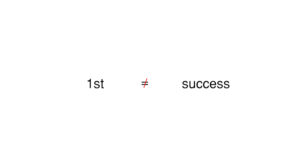
Being early doesn’t guarantee success

We often talk about success as if it’s purely a matter of intelligence, courage, or hard work. If you’re smart enough, brave enough, and willing to take risks, success should follow. But reality is far less fair, and far more dependent on timing.

One of the clearest examples of this I’ve seen is my stepdad. He was always steps ahead in business. Not slightly ahead, years ahead. In 2009, when most companies barely understood what artificial intelligence was, he was already working on AI-related ideas. Long before today’s “AI age,” before ChatGPT, before AI became a boardroom buzzword, he saw where the world was going. The market, the technology ecosystem, the investors, customers, and even other professionals weren’t ready.

Today, he works with open innovation, a management and business strategy that is still relatively unknown outside certain circles. Again, the idea is strong. Again, the timing is questionable. Open innovation has existed for years, yet many organizations still prefer closed systems, internal thinking, and familiar routines. Once more, he’s ahead, but not rewarded for it.

In business, success lives at the intersection of three things:

  • a good idea
  • the ability to execute
  • and timing

Miss the third, and the first two may not matter.

You don’t just need to do the right things, you need to do them at the right time.

What to expect after Netflix acquired Warner Bros.

The streaming and cinema industries are about to undergo significant changes.

Here are my predictions about what comes next:

Cinema will decline even faster

The movie industry has been weakening for years with its declining box office revenues, shorter theatrical windows, fewer people going to the movies, and just people generally experiencing franchise fatigue.

Now, with Netflix controlling one of Hollywood’s oldest and biggest studios, I expect even fewer films in cinemas. Warner Bros. and Netflix have different clients. Or maybe you could say they define them differently. Warner Bros. made products for people who went to the movies, while Netflix makes products for people to stream and watch from their homes. I doubt Netflix will change their entire business strategy after buying Warner Bros. Sure, Netflix probably will release some of the movies in the cinema, especially the follow-ups that people are currently expecting (like Superwoman), but there will definitely be less movies in the cinema from now on.

Netflix prices will go up

Netflix already raises prices regularly. Add the cost of acquiring Warner Bros, plus new production, plus integration costs, plus the lack of competitors = subscription hikes are inevitable.

Netflix is the prime example how the streaming industry is loosing its freedom. Now you can only succeed if you get bought by Netflix or Disney, meaning you can’t truly succeed. These big streaming services like Netflix, Disney Plus, Prime Video, already had oligopolies on the industry, now it’s just becoming more evident. Now we can expect more ads, less possibility of sharing passwords. Basically streaming will become like cable TV.

Warner’s Classic Franchises Will Be Rebuilt for Streaming

Netflix will definitely use already established brands from Warner Bros. Meaning we will get Harry Potter, Lord of the Rings, DCU franchises redone. They will definitely also expand on Game of Thrones.

Other streaming services will merge or die

This acquisition will pressure others to either buy, get bought, or die. Other streaming services will probably make moves on their own, like Paramount currently trying to outbid Netflix and buy Warner Bros. for themselves. We’re entering the “Big Three Era” Netflix, Disney, and Amazon/Apple and everyone else becomes  niche or gets absorbed.

Your movie habits will change

Streaming was quietly becoming the default, but this acquisition sealed it.

I already feel it in my own life, I don’t go to the cinema as often, and honestly, I don’t feel like I’m missing anything. It’s easier to just watch movies and series at home on your computer instead of going out. Less and less of people yearn for that cinema experience.


For better or worse, the future of movies now belongs to streaming.

Mišković and his legacy

Freedom in business

Democracy is a political system where people have the right to choose their leaders and influence public decisions. Democracy is not just elections; it is accountability, transparency, and limits on power.

Liberty means individuals are free to make choices without coercion, as long as they don’t violate the rights of others. True liberty requires strong institutions, the rule of law, and equality before the law.

Free market is an economic system where businesses compete on equal grounds, where prices are shaped by supply and demand, and where success comes from value creation, and not political connections, monopolies, or manipulation.

Serbia has none of this.

Who is Mišković?

Miroslav Mišković is one of the most well-known Serbian businessmen, founder of Delta Holding, and for many people he symbolizes entrepreneurial success. But the truth is much more complicated.

Mišković did not rise in a competitive free market. He rose during the 1990s, a decade defined by hyperinflation, sanctions, economic collapse, and most importantly: tight collaboration between political elites and selected businessmen.

He was vice-president of the government under Slobodan Milošević, and Delta’s expansion during the ‘90s and 2000s happened in an environment where privatizations were not open, transparent, or competitive. Many companies were acquired under unclear circumstances, with state assistance, political backing, and insider advantages that no ordinary entrepreneur could ever access.

This is not free-market capitalism, merit and absolutely nothing about this fits libertarian ideals. Under libertarian principles, market success should come from innovation, risk, and value creation not from having the right connections or being positioned inside a corrupt state apparatus.

Mišković is not the cause of Serbian cronyism, but he is undeniably one of its clearest symbols.

Crony capitalism

Crony capitalism, sometimes also called simply cronyism, is a pejorative term used in political discourse to describe a situation in which businesses profit from a close relationship with state power, either through an anti-competitive regulatory environment, direct government largesse, or corruption.

The clearest example I can think of is Serbia.

At first glance Serbia looks like a capitalist society: private companies, big corporations, shopping malls, advertising, fast economic growth in some sectors.

But beneath the surface we operate under a system best described as crony capitalism , where the state selectively chooses winners, protects politically connected businessmen, and allocates opportunities based on loyalty rather than competition.

Characteristics of crony capitalism in Serbia:

    • Privatizations that favored insiders

    • Political influence over regulatory bodies

    • Unequal access to capital

    • Monopolistic practices tolerated or even encouraged

    • Public contracts given to the same circles over and over

    • A legal system that protects the powerful more than the market

This system kills innovation. It destroys honest competition. It blocks new entrepreneurs.

Crony capitalism is always a gateway to fascism.

Serbia is on its way to fascism.

All it needs now is a common enemy the government could blame for all its problems.

It’s about morals

Mišković is no longer as powerful as he once was, and he is far from the only crony businessman in Serbia. He is simply the most recognizable face of a system that rewards shortcuts over competence. I don’t hate him per se, I hate the system he is actively contributing to and expanding. Criticizing him doesn’t come from personal hatred, it comes from recognizing a pattern that keeps repeating.

The real problem is that young people entering business often admire figures like him, not because they agree with cronyism, but because they genuinely believe this is what “business success” looks like.

Many of them don’t see anything wrong with how he got rich and that is terrifying.

This mindset leads to the same conclusion every time:
“The rules don’t matter, only winning matters.”

This is how a society decays, how you loose freedom. This is why morals are not optional in business. If your only goal is to succeed, no matter what, then inevitably you end up supporting the same system Serbia suffers under now. A system where luck, connections, and corruption decide outcomes — not talent, hard work, or innovation.

Mišković didn’t “beat the market”, he beat a broken system and benefited from it. Mišković isn’t successful because of his “talent”, or “capabilities”, or “cleverness”. He got lucky and played dirty. He is not a good businessman. Put him in an actually free market and system, like the USA. I guarantee he couldn’t make it. I mean if he could, why didn’t he do it yet? With all that money and business he currently has going on, why wouldn’t he try to make it on the American market? The biggest market of all? Because he can’t and he knows he can’t.

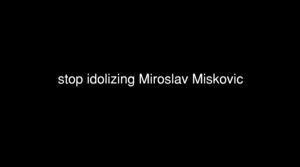
Stop idolizing Miroslav Mišković.