Freedom in business
Democracy is a political system where people have the right to choose their leaders and influence public decisions. Democracy is not just elections; it is accountability, transparency, and limits on power.
Liberty means individuals are free to make choices without coercion, as long as they don’t violate the rights of others. True liberty requires strong institutions, the rule of law, and equality before the law.
Free market is an economic system where businesses compete on equal grounds, where prices are shaped by supply and demand, and where success comes from value creation, and not political connections, monopolies, or manipulation.
Serbia has none of this.
Who is Mišković?
Miroslav Mišković is one of the most well-known Serbian businessmen, founder of Delta Holding, and for many people he symbolizes entrepreneurial success. But the truth is much more complicated.
Mišković did not rise in a competitive free market. He rose during the 1990s, a decade defined by hyperinflation, sanctions, economic collapse, and most importantly: tight collaboration between political elites and selected businessmen.
He was vice-president of the government under Slobodan Milošević, and Delta’s expansion during the ‘90s and 2000s happened in an environment where privatizations were not open, transparent, or competitive. Many companies were acquired under unclear circumstances, with state assistance, political backing, and insider advantages that no ordinary entrepreneur could ever access.
This is not free-market capitalism, merit and absolutely nothing about this fits libertarian ideals. Under libertarian principles, market success should come from innovation, risk, and value creation not from having the right connections or being positioned inside a corrupt state apparatus.
Mišković is not the cause of Serbian cronyism, but he is undeniably one of its clearest symbols.
Crony capitalism
Crony capitalism, sometimes also called simply cronyism, is a pejorative term used in political discourse to describe a situation in which businesses profit from a close relationship with state power, either through an anti-competitive regulatory environment, direct government largesse, or corruption.
The clearest example I can think of is Serbia.
At first glance Serbia looks like a capitalist society: private companies, big corporations, shopping malls, advertising, fast economic growth in some sectors.
But beneath the surface we operate under a system best described as crony capitalism , where the state selectively chooses winners, protects politically connected businessmen, and allocates opportunities based on loyalty rather than competition.
Characteristics of crony capitalism in Serbia:
-
-
Privatizations that favored insiders
-
Political influence over regulatory bodies
-
Unequal access to capital
-
Monopolistic practices tolerated or even encouraged
-
Public contracts given to the same circles over and over
-
A legal system that protects the powerful more than the market
This system kills innovation. It destroys honest competition. It blocks new entrepreneurs.
Crony capitalism is always a gateway to fascism.
Serbia is on its way to fascism.
All it needs now is a common enemy the government could blame for all its problems.
It’s about morals
Mišković is no longer as powerful as he once was, and he is far from the only crony businessman in Serbia. He is simply the most recognizable face of a system that rewards shortcuts over competence. I don’t hate him per se, I hate the system he is actively contributing to and expanding. Criticizing him doesn’t come from personal hatred, it comes from recognizing a pattern that keeps repeating.
The real problem is that young people entering business often admire figures like him, not because they agree with cronyism, but because they genuinely believe this is what “business success” looks like.
Many of them don’t see anything wrong with how he got rich and that is terrifying.
This mindset leads to the same conclusion every time:
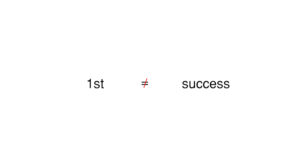
“The rules don’t matter, only winning matters.”
This is how a society decays, how you loose freedom. This is why morals are not optional in business. If your only goal is to succeed, no matter what, then inevitably you end up supporting the same system Serbia suffers under now. A system where luck, connections, and corruption decide outcomes — not talent, hard work, or innovation.
Mišković didn’t “beat the market”, he beat a broken system and benefited from it. Mišković isn’t successful because of his “talent”, or “capabilities”, or “cleverness”. He got lucky and played dirty. He is not a good businessman. Put him in an actually free market and system, like the USA. I guarantee he couldn’t make it. I mean if he could, why didn’t he do it yet? With all that money and business he currently has going on, why wouldn’t he try to make it on the American market? The biggest market of all? Because he can’t and he knows he can’t.
Stop idolizing Miroslav Mišković.